

Weakness, stiffness, poor balance or fear of falling can turn basic movements into difficult tasks, even when you are motivated to recover. By the end, you will know how home physiotherapy targets those barriers, what practice belongs in a safe programme, and when home care is a better or worse fit than other rehabilitation options.
Key takeaways
- Practise strength, balance and transfers in the rooms where you move.
- Use a home assessment to identify fall risks and difficult daily tasks.
- Follow prescribed exercises between visits, stopping for sharp pain or unusual symptoms.
- Choose home physiotherapy when travel makes clinic-based treatment unsafe or impractical.
How physiotherapy turns weakness and poor balance into safer movement
Physiotherapy improves mobility by changing what your body can do, not only how much it hurts.
Muscle strengthening helps you rise from a chair and control each step; increasing joint range of motion helps you reach, bend and climb; balance training at home reduces unsafe swaying; gait practice corrects dragging, uneven steps and poor foot placement.
After stroke, repetitive, task-specific practice transfers gains into daily movement. Repeated sit-to-stand, stepping, bed-to-chair transfers and walking train the exact sequence you need, while unrelated strength exercises alone may not improve those tasks. Services for physiotherapy after stroke should therefore connect each exercise to a measurable goal.
Home physiotherapy can address mobility limits linked to:
- Stroke-related weakness, arthritis and fractures
- Joint replacement recovery and Parkinson’s disease
- Back pain, falls and prolonged bed rest
The therapist may practise turning, reaching for a support, walking over your usual floor and transferring safely. Repetition builds coordination and confidence; progression can add distance, repetitions or less hand support once the current task is safe.
Pain relief is not restored function. For osteoarthritis, therapeutic exercise remains central: local muscle strengthening and aerobic activity support movement, while manual therapy should accompany exercise rather than replace it. A person who feels better but still cannot stand, walk or use the toilet independently needs functional rehabilitation, not passive treatment alone.
What a home mobility assessment measures in real life
A home physiotherapy assessment starts with your medical history, medicines, symptom patterns and recent changes in function. The therapist then checks pain, muscle strength, joint range of motion, cardiopulmonary tolerance, transfers, walking and fatigue. This mobility evaluation shows whether weakness, stiffness, breathlessness, pain or medication effects limit movement.
The therapist watches you get out of bed, use the toilet, turn in a narrow space, approach a doorway, climb stairs and walk across your usual flooring. A clinic walkway can hide hesitation, furniture support, poor foot clearance or difficulty managing a threshold.
A gait assessment and balance assessment become more realistic when performed beside your own bed, bathroom and stairs.
A targeted falls assessment examines:
- Gait, balance and functional ability during everyday tasks
- Medication risks, including dizziness, drowsiness or blood-pressure drops
- Fall hazards such as poor lighting, loose rugs, limited bathroom access, crowded furniture layouts and unsafe stairs
The therapist converts these findings into functional goals you can measure: standing for five minutes, walking to the bathroom, climbing four steps or transferring from bed to chair with less assistance. The plan then targets the specific failure, rather than treating mobility as a generic clinic exercise.
What patients practise between visits—and how to keep it safe
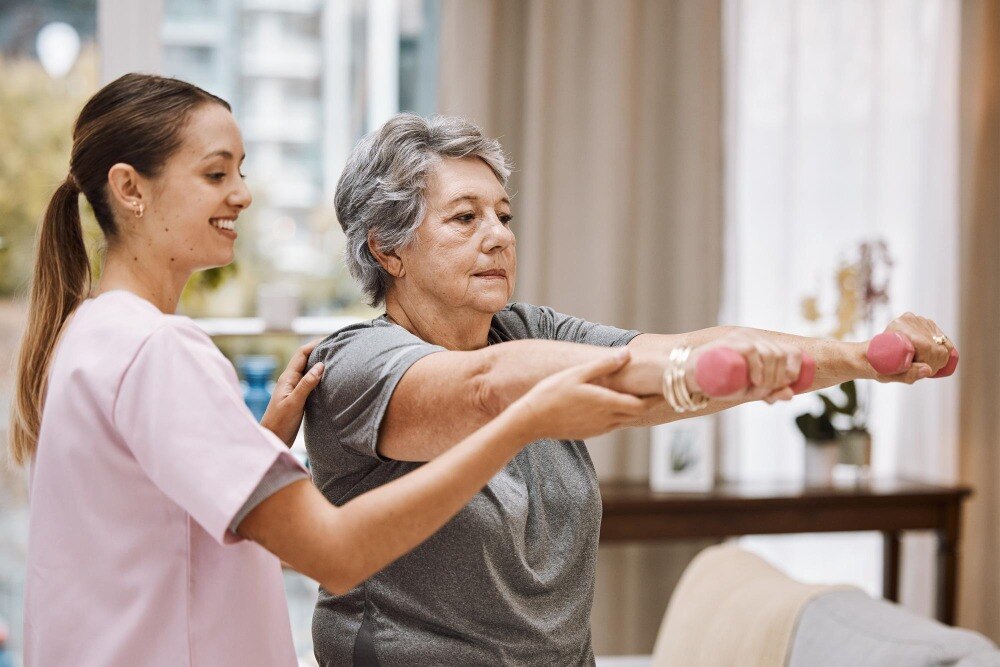
Practise movements that match daily needs: sit-to-stand, bed mobility, transfer training and walking drills. These home physiotherapy exercises build strength, joint control and confidence more effectively than passive treatment alone.
| Activity | Purpose | Practice cue |
|---|---|---|
| Sit-to-stand | Leg strength and transfers | Use a stable chair; lean forward and push through your legs. |
| Heel raises | Calf strength and balance | Hold a secure surface and rise slowly. |
| Ankle pumps | Circulation and ankle movement | Point and flex both feet while seated or in bed. |
| Supported marching | Hip strength and weight shifting | Hold a firm support and lift one knee at a time. |
| Joint range-of-motion work | Reduce stiffness | Move only through the therapist-approved range. |
| Walking drills | Steps, turning and endurance | Follow the prescribed route and pace. |
A caregiver should provide assistance by setting up the route, giving clear instructions and guarding from the agreed position. Let the patient complete every part they can perform safely; do not lift their full weight. Reassess the technique after changes in strength, cognition, pain or equipment.
Exercise progression means more repetitions, a longer walking distance, a harder balance task or less hand support—but only after the current level is safe. Use stable footwear, clear obstacles, schedule rest periods and maintain hydration. Do not practise unsupported balance alone when falls risk is high.
Stop and seek clinical advice for a marked increase in pain, dizziness, unusual breathlessness, chest pain or new neurological symptoms. Record pain, fatigue, walking distance, assistance needed and symptoms after each session.
How the home setting changes equipment, transfers and walking practice
The home changes the treatment plan because real furniture, surfaces and routines expose problems a clinic plinth or smooth walkway can hide. Practising on your own bed, usual chair, bathroom route, doorway, stairs and floor surface reveals unsafe compensations during transfers and walking.
1. Start with a home environment assessment. Watch how you rise from bed, sit down, turn in a narrow space, use the bathroom and approach stairs. The therapist can then match mobility equipment to the task instead of choosing it from a clinic test.
2. Target fall prevention at home when your fall risk is high. Improve poor lighting, remove loose rugs, add bathroom supports, rearrange furniture to widen walking paths and repair or mark stair hazards. Do not apply a generic checklist while missing the doorway or chair that repeatedly causes a near-fall.
3. Arrange cane fitting for your height and hand position. Use the cane on the side opposite the weaker or injured leg. If it does not provide enough support, a walker or another device may be safer.
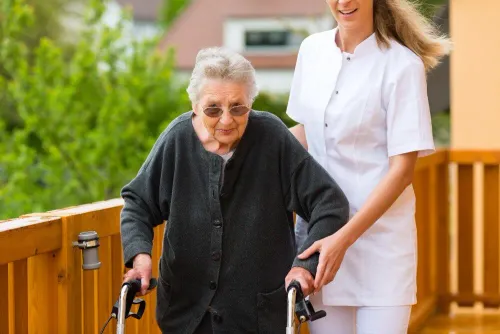
4. Treat a walker as a skill, not a delivery. Walker safety training should teach you to keep the device close, advance it safely and avoid pulling on it to stand unless that model is designed for that technique.
5. Seek emergency assessment for sudden inability to walk, facial drooping, one-sided weakness, speech difficulty, confusion, sudden loss of balance, severe breathlessness, chest pain or suspected fracture. Do not wait for a routine physiotherapy visit.
When home physiotherapy is the right mobility option
| Option | Supervision and access | Best fit and limitations |
|---|---|---|
| Home versus clinic physiotherapy | One-to-one supervision in your space; little travel; privacy depends on your household; limited access to parallel bars, a treadmill and specialist tools | Best when the goal is your bathroom, stairs, bed or narrow doorway |
| Outpatient rehabilitation | Direct supervision, more equipment and a challenging training environment; requires travel and caregiver availability | Suits intensive exercise, closer medical monitoring or severe gait impairment |
| Tele-physiotherapy | Coaching and visual feedback without travel | It cannot inspect every hazard or physically guard a transfer |
| Caregiver exercise routine | Convenient and familiar | A caregiver-only exercise routine lacks professional reassessment and safe progression |
Selected patients after uncomplicated knee replacement rehabilitation can achieve similar short-term functional outcomes at home and in outpatient rehabilitation. Choose facility-based care for major weakness, complications, severe gait impairment or limited caregiver support.
Home physiotherapy is a strong choice when travel is unsafe, exhausting or impractical, or when privacy matters. A clinic is better when you need parallel bars, a treadmill, intensive strengthening or monitoring for cardiopulmonary intolerance.
For supervised mobility work in Gurugram, compare Dhanraj Complete Healthcare Pvt. Ltd with alternatives by asking:
- Is the therapist a qualified home physiotherapist?
- How often will they reassess progress and change exercises?
- Will they teach caregivers guarding, transfers and equipment use?
- What escalation procedure applies after a fall, chest pain or sudden weakness?
- Will they train you on a walker or other device, rather than simply supply it?
Frequently asked questions
How does physiotherapy turn weakness and poor balance into safer movement?
A physiotherapist combines strength, balance, coordination and walking exercises with task practice, then adjusts difficulty as movement improves.
What does a home mobility assessment measure?
It examines walking, standing, transfers, balance, strength and the way you manage real tasks such as getting out of bed or using stairs.
What should patients practise between home physiotherapy visits?
Practise the exercises, transfers and walking tasks prescribed for you, using the recommended support and stopping if you develop sharp pain, dizziness or unusual symptoms.
When is home physiotherapy the right mobility option?
It suits people whose condition, fall risk, limited transport or difficulty leaving home makes clinic visits unsafe or impractical.