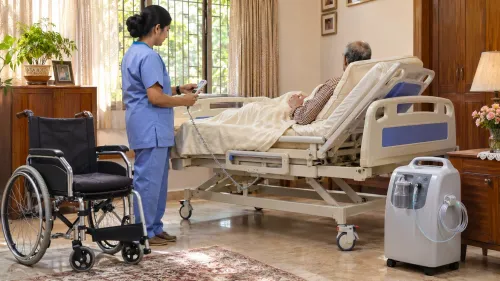
A person with dementia may need help with ordinary tasks while still wanting control over how those tasks happen. A safe home-care plan combines a predictable routine, environmental changes, respectful prompting, and clearly assigned responsibilities so families know what a caregiver can handle and when clinical help is needed.
Key takeaways
- Keep the daily sequence familiar while offering small, meaningful choices.
- Remove trip hazards, secure exits, and supervise cooking and bathing.
- Match support to the task, from reminders to hands-on personal care.
- Review risks and abilities after illness, falls, or noticeable behaviour changes.
Build a predictable routine without taking away choice
A dementia daily routine works best when its order stays familiar while the person still controls small decisions. Keep the same sequence each day, but move tasks later when the person is tired, in pain, or unsettled.
- Wake gently, open the curtains, and offer the toilet before dressing.
- Offer two outfits, then let the person manage buttons, sleeves, or shoes while you give one-step prompts.
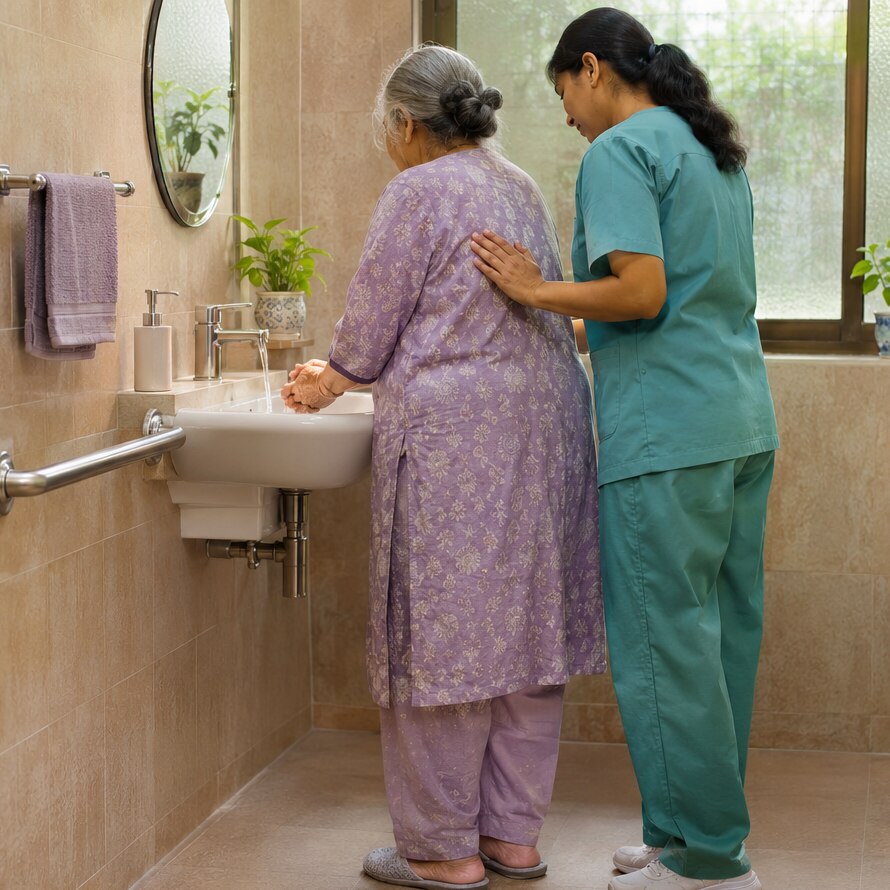
- Schedule bathing and dementia personal care when the person is most alert; test the water, use a shower chair, and protect privacy.
- Serve meals in a familiar place, then provide medicines only under the agreed medication plan.
- Plan a short activity and rest period, followed by a prompted toilet visit before evening confusion increases.
- Repeat the toilet, washing, and bedtime sequence with low lighting and minimal conversation.
Choice works best when it is limited and real: “Blue shirt or green shirt?” is easier than “What do you want to wear?” Wait for an answer and allow extra time; taking over too quickly can turn assistance into resistance.
For bathing refusal dementia, stop arguing. Explain one step, offer a later time or a wash at the sink, and ask whether cold, pain, fear, or embarrassment is causing the refusal.
Calm caregiver communication—short sentences, eye contact, and a reassuring tone—supports cooperation. After an accident, cleanse and dry the skin promptly, then record new or worsening incontinence for medical review.
Reduce wandering, falls, burns, and bathroom accidents at home
Locking every door is not a wandering plan. Build dementia home safety around layers: a recent photo and identification card, a door or window alert, informed neighbours, and a written search plan with emergency contacts. Keep keys, medicines, and car access controlled without making exits look threatening.
Wandering prevention works best when supervision increases during the person’s usual restless periods.
- Use short, one-step prompts and allow extra time; rushing increases resistance and falls.
- Check footwear, vision, dizziness on standing, pain, and medicines after any near-fall.
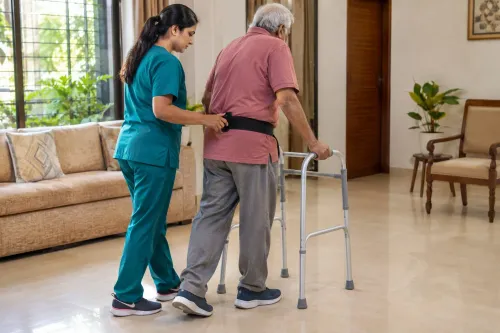
- Keep a walker or cane correctly adjusted, and supervise its use until the person demonstrates safe technique.
| Hazard | Home changes | Supervision method |
|---|---|---|
| Wandering | Door alarms, secure gates, visible labels away from unsafe exits | Observe transitions, check alerts, and follow the search plan immediately |
| Falls | Remove loose rugs and clutter; add brighter lighting, handrails, and non-slip flooring | Walk beside the person on stairs and during rushed toilet trips |
| Burns | Fit stove controls or disable the cooker; store kettles, matches, and hot liquids out of reach | Stay present during cooking and serve food at a safe temperature |
| Bathroom accidents | Install grab bars, a raised or contrasting toilet seat, night lighting, and easy-to-remove clothing | Offer prompted toileting, cleanse and dry skin promptly, and check the route |
These measures support bathroom safety for elderly people, but new incontinence, sudden confusion, repeated choking, a head injury, or a serious fall needs medical assessment rather than extra pads alone. Home-care staff can assist with personal care and supervision; they do not replace clinical evaluation.
Match each task to the right kind of support
An attendant can help with bathing, dressing, toileting, meals, walking, transfers, and supervision, but cannot replace clinical judgment. Use the home nursing versus attendant care distinction to assign responsibility before a shift begins.
- Attendant: provide dementia attendant duties such as cueing each step, assisting with washing and clothing, supervising eating, accompanying toileting, and reporting changes. Do not ask the attendant to diagnose, change treatment, or improvise a lift.
- Registered nurse: manage medication support dementia requires when the person cannot identify tablets, remember doses, or respond safely to a missed dose. The nurse can administer medicines under the care plan, check vital signs, dress wounds, and escalate deterioration.
- Physiotherapist: assess walking, strength, balance, transfers, and dementia mobility assistance. They select and fit a walker, transfer belt, stand-assist device, or lift, then train caregivers; equipment alone does not make lifting safe.
- Occupational therapist: assess bathing, cooking, wandering, dressing, and appliance risks, then recommend grab bars, contrast markings, alarms, or adapted equipment. An improperly fitted aid or poorly arranged bathroom can increase falls.
- Doctor: assess a new fall, head injury, repeated choking, breathing difficulty, overdose, or sudden confusion, drowsiness, hallucinations, or rapid decline. Delirium from infection, dehydration, pain, constipation, or medicines needs prompt evaluation.
- Family member: provide consent, history, preferences, and emergency contacts, and decide who is called when the care plan is exceeded. Ask the service to document response times and emergency instructions.
Check whether a home-care service is safe and reliable before the first shift
Advertised availability proves nothing about safe dementia care. Before the first shift, ask who will work, what they are trained to do, who covers absence, and how the service handles a crisis.
1. Check identity, employment history, dementia-specific training, first-aid certification, and police or background screening. Home-care worker verification should include original documents and the agency’s written screening policy. Ask for caregiver references from families who received comparable personal-care support, then call them yourself.
Use “how to choose dementia caregiver” as a prompt to assess patience, communication, toileting support, and safe transfers—not just friendliness.
2. Confirm the shift arrangement in writing: start and finish times, overnight supervision, duties, break cover, backup worker, and whether transfers require two trained people or equipment. A worker must not manually lift someone they cannot control safely.
3. Require caregiver handover records at every shift change. They should state meals and fluids, toileting, sleep, mood or confusion changes, falls, wandering attempts, skin concerns, medicines administered or missed, and family notifications. Do not accept “all fine” as a handover.
4. Test the emergency plan with a real scenario. It must list medicines, diagnoses, allergies, contacts, mobility and communication needs, access instructions, backup caregivers, and escalation times for choking, a fall, breathing trouble, overdose, or sudden confusion.
During a fire, outage, severe weather event, or equipment failure, the plan must provide direct supervision, not only an alarm.
Dhanraj Complete Healthcare Pvt. Ltd can be assessed by requesting these records and procedures before accepting a proposed caregiver or shift. Observe the first visit and stop the arrangement if the worker ignores consent, improvises transfers, or cannot explain escalation steps.
Related products
 | Patient care services at home 24x7 hours all types of patients care services available here Benefits of patient care services in Gurugram include individualized, expert treatment... View product → |
 | Old Age Care Our attendants are present at every stage, helping with bathing, eating, engaging in stimulating activities for mental well-being, and making sure... View product → |
Review the care plan as the person’s abilities and risks change
A dementia care plan review is needed after a fall, new incontinence, choking episode, medication change, or clear loss of ability—not only on a fixed date. Compare what the person could do last month with what happens now, document the change, and assign someone to update instructions.
- Mobility: reassess transfers, walking-aid use, supervision, and the need for physiotherapy or an occupational-therapy home assessment. A fall, head injury, or inability to bear weight needs clinical assessment.
- Continence: record accidents, urgency, constipation, and skin condition; adjust toilet prompts, clothing, pads, and night supervision.
- Swallowing: report coughing during meals, wet-sounding speech, pocketed food, weight loss, or repeated choking promptly. Do not alter food texture or thicken drinks without clinical advice.
- Confusion: use delirium versus dementia as a safety check. Sudden or fluctuating confusion, drowsiness, hallucinations, or rapid decline needs prompt assessment for infection, dehydration, pain, constipation, or medication effects.
- Medicines: reconcile every prescription, over-the-counter product, and dose after a discharge or medication error. Ask a pharmacist or doctor to simplify and supervise administration.
Add pressure injury prevention when mobility, nutrition, moisture, or sensation changes. Inspect vulnerable skin, keep it clean and dry, reposition according to an individual assessment, and report persistent redness, blisters, open areas, or unexplained pain.
Dementia emergency planning must state who to call, how quickly, and how to supervise the person during a fire, outage, equipment failure, wandering episode, breathing problem, or suspected overdose. Keep current medication and medical-condition lists, contacts, access instructions, communication preferences, and backup caregiver details.
Frequently asked questions
How can you build a dementia routine without removing personal choice?
Keep tasks in the same order each day, then offer choices such as clothing, breakfast, or activity timing.
How can home care reduce wandering, falls, burns, and bathroom accidents?
Use clear pathways, secure unsafe exits, supervise hot appliances and bathing, improve lighting, and provide timely toileting prompts.
What type of support should a dementia patient receive at home?
Choose support based on the task: reminders for familiar activities, supervision for risks, and hands-on help for personal care.
How do you check whether a dementia home-care service is safe and reliable?
Ask about caregiver training, identity checks, supervision, emergency procedures, replacement staff, written care plans, and incident reporting.
Related products
 | Home Nursing Care Home Nursing Service encompasses a wide range of healthcare services that can be easily administered at your home. View product → |
 | Nursing care at home 24X7 hours all types of nurse services at home available here In Emergency cases for patients services for calling number nurse : 9818401536 Dhanraj... View product → |
 | Patient Care Our patient care services provide a broad range of care levels, from basic care given by physiotherapists and medical attendant services in Gurgaon... View product → |