


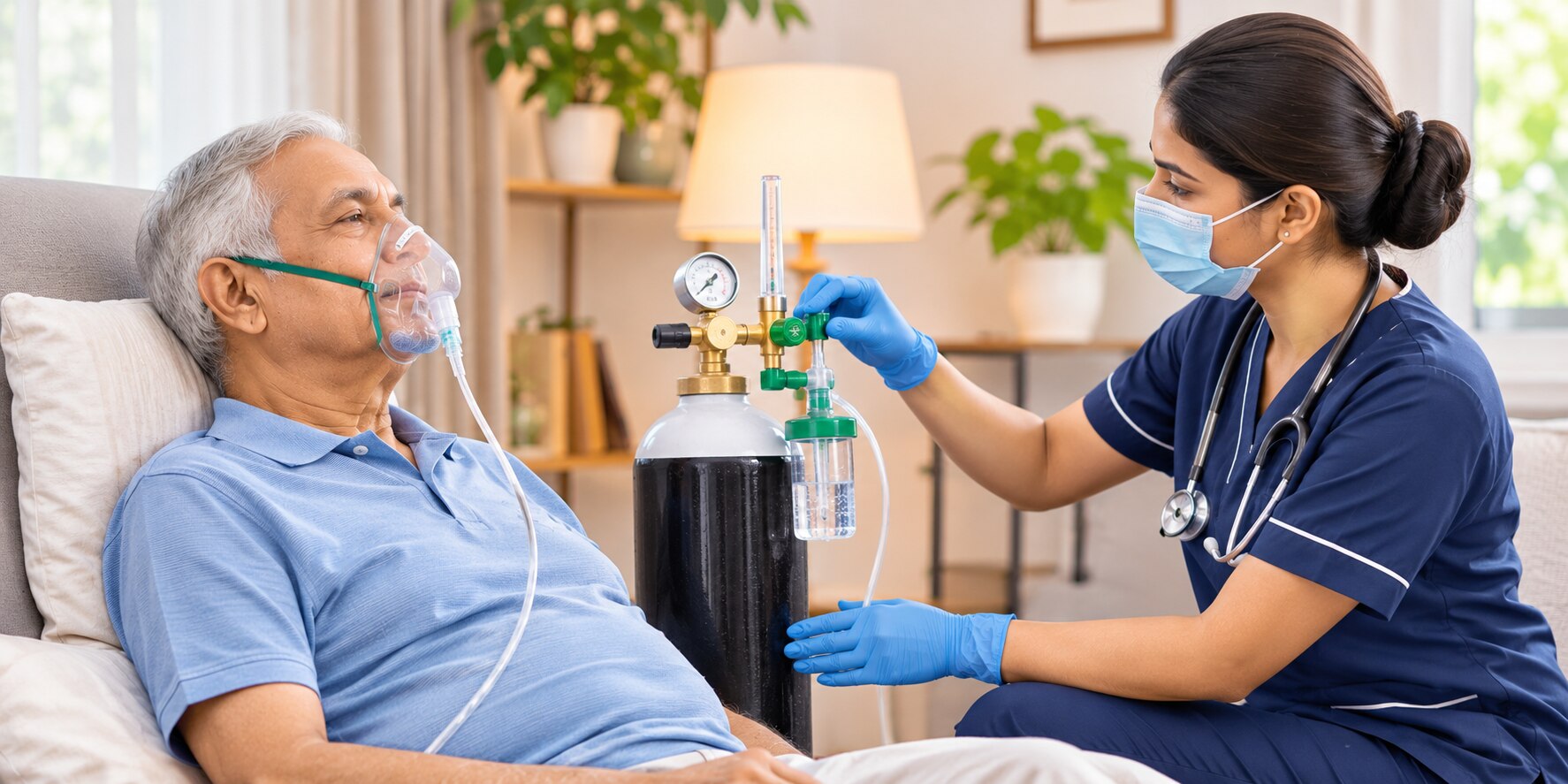
Home oxygen is prescription therapy, so the safe arrangement depends on the patient’s written oxygen plan, the cylinder’s expected duration, and a supplier that explains its equipment and backup process. By the end, you will know what to confirm with the prescriber, how to compare cylinder options, what to inspect at delivery, and what to do when oxygen or breathing problems become urgent.
Key takeaways
- Obtain a written oxygen prescription before ordering any cylinder.
- Match cylinder size to the prescribed flow rate and hours of daily use.
- Confirm delivery includes the cylinder, regulator, tubing, and patient interface.
- Keep a replacement plan and call emergency services for worsening breathing.
Confirm the prescription before ordering oxygen
Before arranging home oxygen, obtain a written home oxygen prescription from the treating clinician. Oxygen is a prescription therapy, not a wellness product, and the order must match the patient’s condition and daily routine.
Ask the prescriber to state:
1. The oxygen flow rate litres per minute (L/min), or the exact setting for a prescribed device. Do not increase it yourself; oxygen targets and safe flow rates differ between conditions.
2. Whether the order is for continuous oxygen, exertional oxygen, nocturnal oxygen, or a combination. If you are arranging exertional oxygen therapy services at home, confirm whether oxygen is needed only during walking, bathing, or other activity.
3. The number of hours per day and the situations that require oxygen, including sleep and travel within the home.
4. The delivery method: compressed-gas cylinder, oxygen concentrator, nasal cannula, mask, or a conserving device. A conserving device must trigger reliably for that patient and meet the prescribed requirement; it is not automatically suitable during sleep.
5. The target oxygen saturation range, the permitted measurement method, and when to contact the clinical team.
6. The treatment duration, review date, and backup instructions for power failure or equipment problems.
Chest pain, blue or gray lips, confusion, severe breathlessness, or inability to speak normally needs urgent medical assessment. Do not treat deterioration simply by turning up the oxygen.
Match cylinder capacity and duration to the care plan
Choose a D-type oxygen cylinder for longer intervals between refills, and a portable oxygen cylinder for movement or shorter trips. Capacity alone does not determine duration: pressure, prescribed flow, usable oxygen, and any conserving device all change the result.
Ask the supplier to provide these figures for the patient’s actual prescription:
- Oxygen cylinder water capacity in litres, shown on the cylinder
- Filled pressure in bar or psi, shown on the gauge or filling record
- Flow in litres per minute and hours of use per day
- The reserve pressure at which you must order a replacement
- The estimated duration with the exact regulator or conserving device fitted
Use this oxygen cylinder duration calculation as a planning estimate: duration in minutes equals water capacity in litres multiplied by filled pressure in bar, divided by flow in litres per minute.
For example, a 40-litre cylinder at 150 bar and 2 L/min contains a theoretical 3,000 minutes, or 50 hours, before allowing for unusable residual pressure and delivery variation. The supplier must confirm the usable figure.
| Option | What it provides | Main continuity issue |
|---|---|---|
| Compressed cylinder | Stored oxygen without electricity | Requires refilling and a compatible regulator |
| Portable cylinder | Oxygen during movement or transport | Smaller supply; check duration carefully |
| Oxygen concentrator | Oxygen extracted from room air | Needs electricity; arrange backup for outages or breakdowns |
A conserving device is not automatically suitable: it can fail to trigger during sleep or with weak breathing. Use it only after clinical confirmation.
Ask the supplier what arrives and how replacement works
Before you book, get written answers about what arrives, who delivers it, and how an empty or faulty cylinder is replaced.
Ask the supplier to confirm:
- Whether the medical oxygen cylinder delivery includes a full cylinder, compatible oxygen regulator and flow meter, tubing, cannula, and fire-safety instructions.
- Whether a trained person will demonstrate opening and closing the valve, reading the gauge, attaching the regulator, changing cylinders, and checking for leaks.
- How the oxygen cylinder refill service works: collection time, refill turnaround, delivery charge, and after-hours replacement contact.
- How many backup cylinders come with the arrangement, and what happens during a delayed refill, leak, damaged valve, or equipment failure.
- The cylinder serial number, filled pressure, capacity, and oxygen cylinder inspection date. Reject a cylinder that is overdue for inspection, damaged, contaminated, or missing its identification markings.
- Whether the supplier replaces leaking equipment. Never accept an improvised repair, and keep oil, grease, petroleum jelly, and other petroleum products away from oxygen fittings.
| Option | What arrives | How replacement works |
|---|---|---|
| Compressed oxygen cylinder | Cylinder, regulator, flow meter, tubing, and cannula | Arrange refill or exchange before the gauge reaches empty; ask for a backup |
| Oxygen concentrator | Electrically powered machine, tubing, and cannula | Ask for a backup cylinder during power cuts or machine breakdowns |
| Combined plan | Concentrator plus stored-oxygen cylinder | Confirm which device covers outages and how quickly each is replaced |
If you contact Dhanraj Complete Healthcare Pvt. Ltd, ask them to write these terms, equipment details, and response times on the booking confirmation.
Related products
 | Oxygen cylinder services at home Oxygen Cylinder service at home 24x7 hours on Rent and Sell. There are many advantages to renting an oxygen cylinder for home usage, such as better oxygen delivery for respiratory... View product → |
 | oxygen cylinder Rent & Sell Online 24/7 oxygen cylinder Rent & Sell Online 24/7 The most popular items oxygen cylinder Rent & Sell Online 24/7 Welcome To our services company 'Dhanraj Complete Healthcare Private Limited' in... View product → |
Set up the cylinder safely and check every delivered part
A cylinder belongs upright in a stand or chain-secured holder, not loose under a bed or leaning against furniture. Keep it away from flames, heaters, cooking surfaces, direct sunlight, and exits. This is the foundation of oxygen cylinder safety at home: a falling cylinder can damage its valve and turn into a projectile.
Before accepting delivery, check every part against the prescription and supplier instructions:
- Confirm the cylinder label identifies medical oxygen, and inspect the body, valve, protective cap, seal, and connections for dents, corrosion, dirt, or damage.
- Use only the compatible regulator or flow-control device supplied or approved for that cylinder. Never attach an improvised adapter or open the valve without the regulator fitted.
- Ask the technician to demonstrate attaching the regulator, reading the pressure gauge, opening and closing the valve, changing cylinders, and setting the prescribed flow.
- Complete the oxygen cylinder leak check with the supplier’s approved method. Never use a flame; report hissing, a falling gauge reading, or a damaged seal.
- Connect tubing firmly, check that it is not kinked or crushed, and confirm oxygen reaches the nasal cannula or mask at the ordered setting.
- Route tubing along walls rather than across doorways or stairs. An oxygen tubing trip hazard can cause a fall or pull the cylinder over.
- Keep spare cylinders secured separately, with valve protection fitted when supplied.
Do not increase the flow yourself. A conserving device also needs clinical confirmation before use, especially during sleep.
Prepare for an empty cylinder, equipment failure, or worsening breathing
Do not solve a breathing crisis by turning up the flow. Sudden breathlessness during oxygen therapy, chest pain, blue or gray lips, confusion, or difficulty speaking normally requires urgent medical assessment.
1. Follow the oxygen cylinder emergency plan written by the prescriber or supplier. Keep the emergency number, prescription, supplier’s after-hours contact, and backup-cylinder location beside the equipment.
2. If the cylinder is empty, switch to the full compatible cylinder only if you were trained to attach the regulator and open the valve. Never connect an unapproved regulator or open the valve without the specified flow-control device.
3. If the regulator hisses, leaks, is damaged, or becomes contaminated, close the cylinder valve if you can do so safely. Keep flames, cigarettes, sparks, oil, grease, and petroleum jelly away; do not tape, tighten, or lubricate the fitting. Move to fresh air and call the supplier for replacement equipment.
4. For a concentrator outage, use the oxygen concentrator power failure backup supplied for the prescription, such as a charged backup cylinder. If no backup works, call emergency services rather than waiting for electricity to return.
5. Call emergency services for low oxygen when the reading remains below the target given by the prescriber, or when severe symptoms appear. Keep the patient upright, stay with them, and take the oxygen prescription and equipment details with them.
Frequently asked questions
What should you confirm before ordering home oxygen?
Obtain a written home oxygen prescription from the treating clinician, including the prescribed flow rate and use instructions. Oxygen is prescription therapy, not a wellness product.
How do you choose the right oxygen cylinder capacity?
Match cylinder capacity to the prescribed flow rate and the number of hours the patient needs oxygen each day. Ask the supplier how long the cylinder will last under that care plan.
What should you ask an oxygen cylinder supplier before delivery?
Ask what arrives with the cylinder, including the regulator, tubing, and patient interface, and confirm how empty-cylinder replacement or refilling works.
How should you prepare for an empty cylinder or worsening breathing?
Confirm the replacement process before the cylinder is empty and keep emergency contact details available. Call emergency services if breathing worsens rather than relying on a cylinder delivery.