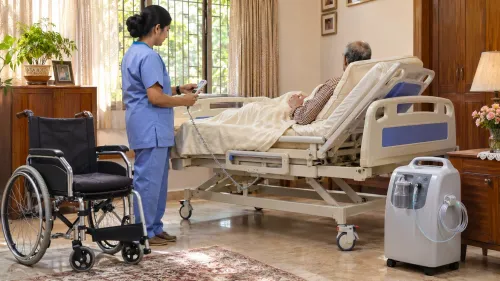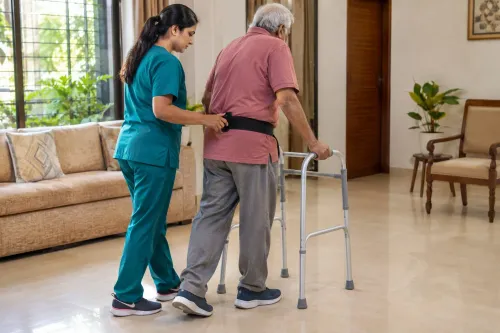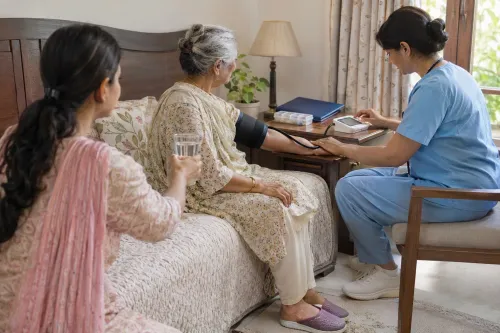

The right setting depends on the patient’s stability, ability to travel safely, and the kind of assessment required. By the end, you will be able to distinguish a home consultation from telehealth, a clinic appointment, urgent care, or emergency services—and prepare for a visit that may still lead to hospital referral.
Key takeaways
- Call emergency services for breathing trouble, unconsciousness, severe bleeding, or rapid deterioration.
- Choose a home visit for stable patients who cannot travel safely or need in-home review.
- Ask what the doctor can assess at home and which tests require a facility.
- Confirm the clinician’s identity, qualifications, fees, arrival time, and emergency escalation plan.
Use the symptom severity rule before choosing a home visit
Start with doctor home visit triage: choose emergency help for danger signs, not convenience. Home consultation versus emergency depends on stability, breathing, consciousness, bleeding, and how quickly the condition is changing.
| Option | What it means | When it applies |
|---|---|---|
| Ambulance | Immediate transport and emergency care | Red flag symptoms such as chest pain, severe breathlessness, stroke signs, uncontrolled bleeding, seizure, loss of consciousness, or sudden severe confusion |
| Emergency department | Hospital assessment for a serious problem needing tests or treatment | The patient is stable enough to travel but has severe pain, worsening breathing, repeated vomiting, a serious injury, or a rapidly deteriorating condition |
| Same-day clinic | Prompt examination without ambulance-level danger | New fever, suspected infection, worsening chronic symptoms, a wound problem, or medication side effects in a stable patient |
| Teleconsultation | Remote assessment and advice | Mild, stable symptoms when the patient can speak clearly, check basic observations, and attend testing if advised |
| Non-urgent home consultation | Planned in-person assessment at home | The patient is stable but cannot safely travel because of frailty, severe mobility limits, recent discharge, advanced illness, or a major transport barrier |
A home visit is not the right response to red flag symptoms. For a stable patient, ask the clinician whether an in-person assessment is necessary; the home setting can reveal falls, medication, food, sanitation, caregiver, and equipment problems that a video call misses.
Disclose fever, cough, vomiting, diarrhoea, or known infection before booking so the clinician can plan masking, ventilation, and separation from vulnerable household members.
When is a home consultation the most appropriate option?
Choose a home consultation when the patient needs an in-person assessment but cannot safely travel to a clinic. Frailty, severe mobility limitation, recent surgery or hospital discharge, advanced illness, or a major transport barrier can justify a visit; convenience alone does not.
| Option | What it means | When it applies |
|---|---|---|
| Teleconsultation | Remote review without physical examination | Stable symptoms, clear history, and no need to check vital signs, wounds, mobility, or medicines in person |
| Home consultation | A clinician examines the patient where they live | Routine follow-up at home, medication review, chronic disease monitoring at home, wound assessment, fever assessment, or an elderly-patient review when travel is unsafe |
| Clinic appointment | Planned assessment in a medical facility | The patient can travel safely, needs tests or equipment unavailable at home, or requires specialist review |
| Emergency department or ambulance | Immediate facility-based assessment | Chest pain, severe breathlessness, stroke signs, uncontrolled bleeding, seizures, loss of consciousness, or sudden severe confusion |
A home visit also shows problems a clinic can miss: unsafe walking routes, poor medicine storage, missing food, limited caregiver capacity, inadequate heating or sanitation, and difficulty using prescribed equipment. It is especially useful after discharge or a major treatment change, when someone must confirm that medicines were obtained and instructions work in the home.
A visit remains an assessment, not a promise of home treatment. Abnormal vital signs, diagnostic uncertainty, rapid deterioration, or inadequate support can require immediate transfer to a clinic or hospital.
Know what a doctor can assess at home—and what requires a facility
A visiting doctor can examine the patient, review medicines, assess symptoms, and decide whether treatment can safely continue at home. During what happens during a home doctor visit, the clinician usually records a history, performs a physical examination, checks vital signs at home, reviews recent discharge papers, and evaluates mobility and available support.
Home treatment may include advice, prescriptions, medication changes, chronic-disease monitoring, fever assessment, and follow-up after surgery or hospital discharge. A home wound assessment can identify redness, swelling, drainage, increasing pain, wound separation, or signs of infection, but the clinician may still need a facility for cultures, imaging, surgical review, or advanced dressing procedures.
Ask the service what it can perform before booking. The limits of home medical care often include same-visit X-rays or ultrasound, extensive laboratory testing, intravenous medicines, oxygen escalation, blood transfusion, emergency procedures, and immediate specialist assessment.
Move to a clinic or hospital when the home examination cannot answer the key diagnostic question, or when treatment exceeds the equipment and staffing available at home. The doctor may recommend transfer even after arriving.
- Seek emergency help for chest pain, severe breathlessness, stroke signs, uncontrolled bleeding, seizures, loss of consciousness, or sudden severe confusion.
- Choose facility evaluation for persistently abnormal vital signs, rapidly worsening illness, suspected fracture, deep or infected wounds, dehydration requiring intravenous fluids, or a need for urgent imaging.
- Arrange a clinic visit when the patient is stable but needs tests, a procedure, or specialist assessment unavailable during the home visit.
Prepare the patient and verify the visiting service before booking
Before booking, tell the service the patient’s age, main symptoms, when they began, relevant diagnoses, current medicines, allergies, mobility limits, recent hospital discharge, and whether anyone has fever, cough, vomiting, diarrhoea, or another contagious symptom. This helps the service send the right clinician and plan infection-control measures.
1. Gather documents for home consultation: photo identification, prescription and medicine list, allergy record, recent blood-test or scan reports, discharge summary, insurance details, and the patient’s questions. Keep medicines in their original packs and have the patient’s temperature, blood-pressure readings, glucose readings, or symptom diary ready if available.
2. Prepare the home and patient for examination. Provide a well-lit, ventilated space, clear access for equipment, and a caregiver who knows the history. Do not conceal an infectious symptom; ask about masking, hand hygiene, separation from vulnerable household members, and protective equipment before the clinician arrives.
3. Ask these questions to ask home healthcare service: What can the clinician do during the visit, and what requires a clinic or hospital? Who will attend, and what are their doctor registration details? What is the response time, service area, follow-up process, after-hours route, cancellation policy, and separate charge for equipment, tests, or travel?
Confirm coverage in writing; “home visit” does not guarantee insurance payment.
If you are comparing providers in Gurugram, Dhanraj Complete Healthcare Pvt. Ltd can be assessed using the same checklist rather than its service label. Do not book until the service confirms that it can meet the patient’s clinical need.
Related product
 | Doctor Consultation at Home If you or your loved one is going through a medical treatment and require doctor’s intervention regularly or need a general health check because of... View product → |
Treat the visit as part of a care plan, not a guarantee of home treatment
A home assessment ends with a decision, not an assumption that treatment will continue at home. The clinician should explain the findings, what remains uncertain, and whether the patient needs monitoring, tests, treatment, or a higher level of care. Abnormal vital signs, rapid deterioration, diagnostic uncertainty, or inadequate caregiver support can make home management unsafe.
Before the clinician leaves, confirm each part of the plan:
- Referral: ask when home visit requires hospital referral, which facility to use, how the patient will get there, and whether an ambulance is needed. Do not delay emergency help while waiting for a written referral.
- Follow-up: obtain a home visit follow-up plan with the date, warning signs, responsible clinician, and after-hours contact. Confirm who reviews test results and medication changes.
- Infection control: disclose fever, cough, vomiting, diarrhoea, rash, or known exposure before arrival. Agree on ventilation, masking, hand hygiene, protective equipment, and separation from vulnerable household members. This is infection control during home visit, not an optional extra.
- Coverage: check home health care coverage in writing, including eligibility, visit limits, clinician fees, cancellation charges, and separate billing for equipment, laboratory tests, or transport.
- Practical support: arrange medicines, wound supplies, oxygen, mobility equipment, nursing, therapy, pharmacy, or social-work help when the problem involves daily functioning.
A service that cannot provide the required test or treatment should explain the next step before the visit ends.
Frequently asked questions
When should you choose emergency help instead of a doctor home visit?
Choose emergency help for breathing difficulty, altered or absent consciousness, severe bleeding, chest pain with collapse, seizures, or a condition that is worsening quickly. Do not wait for a home consultation when the patient is unstable.
When is a doctor home visit appropriate?
A home consultation suits a stable patient who cannot travel safely, needs a medical review after illness, requires medication assessment, or needs help managing an ongoing condition at home.
What can a doctor assess during a home consultation?
A doctor can take a history, examine the patient, measure vital signs, review medicines and records, assess mobility and hydration, and recommend treatment or testing. Blood tests, imaging, procedures, and intensive monitoring may require a clinic or hospital.
How should you prepare for a doctor home visit?
Keep the patient’s identification, prescriptions, test reports, allergy details, symptom timeline, and questions ready. Clear space for examination, ensure good lighting, and provide access to the patient.
What should you verify before booking a home doctor visit?
Confirm the clinician’s name and qualification, the service area, consultation fee, expected arrival window, available equipment, cancellation terms, and the process for arranging emergency transfer.