

A patient who cannot get safely from bed to a vehicle may face more than inconvenience: transfers, stairs, transport time and fatigue can increase the risk of falls or clinical deterioration. By the end, you will be able to screen for a suitable home visit, recognise emergencies, prepare useful information and compare providers without confusing a house call with ambulance or hospital care.
Key takeaways
- Choose a home visit when travel creates unsafe transfers, severe pain, or exhaustion.
- Call emergency services for sudden weakness, breathing trouble, chest pain, or altered consciousness.
- Prepare medication lists, recent reports, symptoms, and a clear route to the patient.
- Check provider licensing, clinician credentials, visit scope, response time, and follow-up arrangements.
Which mobility problems make a home visit a sensible option?
A doctor home visit makes sense when function, not diagnosis alone, makes travel unsafe or excessively burdensome. Consider it for someone unable to leave bed or sit upright, with paralysis, severe weakness, unsafe transfers from bed to chair, advanced arthritis, repeated falls, or fatigue or pain triggered by travel.
A recent fracture and postoperative weight-bearing or movement restrictions can create substantial at-home care needs.
- Can the patient stand or transfer with the available help?
- Can they tolerate the journey seated or lying down?
- Do stairs, narrow doorways, a missing lift or difficult building access block departure?
- Does leaving home require two caregivers, a lift, transfer board or other equipment?
A wheelchair does not solve every transfer problem. Caregiver strength, training and availability matter. Someone who attends an occasional appointment may still qualify for a doctor home visit when each trip requires considerable and taxing effort.
A home assessment can reveal loose rugs, poor lighting, blocked furniture, badly positioned walkers, oxygen tubing and electrical cords that a clinic cannot show.
| Option | Best fit | Main limitation |
|---|---|---|
| Home visit | Stable problems needing examination, medication review or follow-up | Not emergency treatment |
| Teleconsultation | Reliable communication and no hands-on examination needed | Cannot assess transfers or physical findings |
| Clinic transport | Imaging, blood tests or planned procedures | Travel may worsen pain or risk |
| Emergency services | Chest pressure, severe breathing trouble, new facial droop, sudden one-sided weakness, major bleeding, unresponsiveness, seizure or rapidly worsening confusion | Do not wait for a routine visit; record stroke-symptom onset time |
Should you book a home visit, use teleconsultation, arrange transport or call emergency services?
1. Book a home visit for a stable problem that needs history-taking, examination, medication review or follow-up but not immediate hospital treatment. This suits a post-discharge review when transfers, wound care, oxygen use or medication changes need assessment in the home.
2. Choose teleconsultation when the patient can communicate reliably and the clinician can answer the question from symptoms, records or visual examination. It is the better option for clarifying instructions or reviewing results when no hands-on assessment is needed. The home visit versus teleconsultation choice depends on whether examination or direct observation will change care.
3. Arrange transport to a clinic or diagnostic centre when the patient needs blood tests, imaging, specialist equipment or a planned procedure. Use ambulance transport when another vehicle could endanger the patient’s health, not simply because the patient cannot walk independently.
A private car, wheelchair vehicle or stretcher transport may be safer when clinical assessment does not show ambulance necessity.
4. Call local emergency services instead of booking a routine visit for severe chest pressure, severe breathing difficulty, new facial droop, sudden one-sided weakness, speech trouble, major or uncontrolled bleeding, unresponsiveness, seizure or rapidly worsening confusion. These stroke warning signs require urgent action: record the exact time symptoms began and call immediately.
Do not wait for a house call or drive to an emergency department if the patient is deteriorating. Limited mobility never makes a non-emergency home visit an adequate response to sudden deterioration.
What can a doctor realistically assess inside the home?
A house call can produce a useful clinical assessment, not just a conversation. The clinician can:
- Take a history and perform a focused home physical examination.
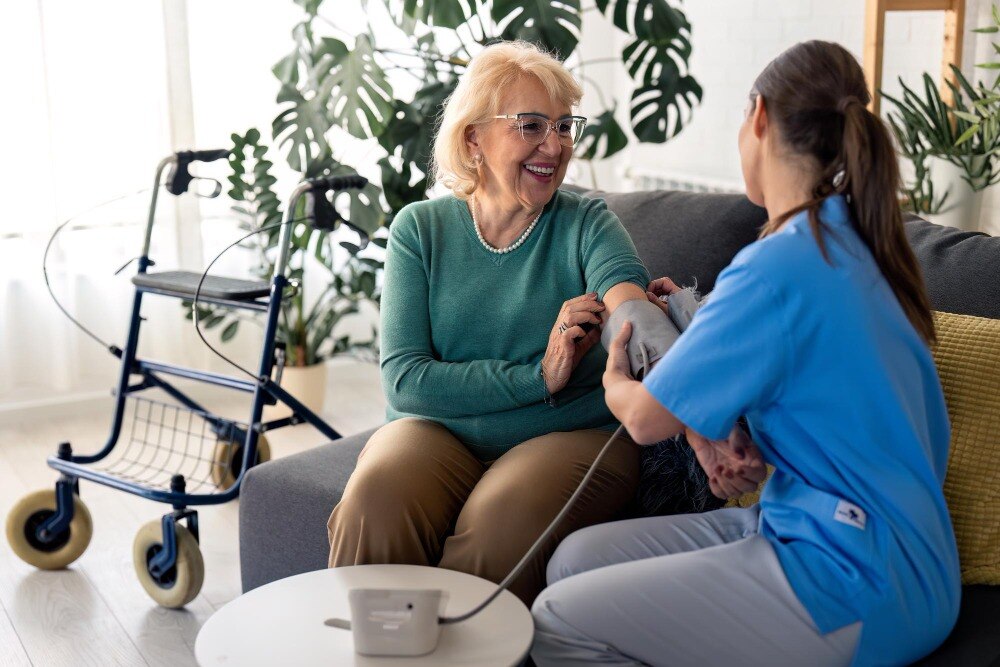
- Measure pulse, temperature, respiratory rate, blood pressure and oxygen saturation.
- Reconcile every prescribed, over-the-counter and supplemental medicine.
- Review wounds and perform basic point-of-care testing when suitable equipment is available.
A fall assessment may examine gait, balance, vision and medication effects. For orthostatic blood pressure, measure after several minutes lying down, then again after standing; a fall of at least 20 mm Hg systolic or 10 mm Hg diastolic within three minutes meets the common threshold. Dizziness or falls still matter below that threshold.
A pulse oximeter at home is a screening tool, not proof that breathing is safe. Poor circulation, cold fingers, skin pigmentation, smoking and nail polish can affect readings; breathlessness or blue lips require clinical judgment, not reassurance from one number.
The clinician can inspect for pressure injury and review repositioning, moisture, nutrition and skin condition as part of pressure injury prevention. Hospital or diagnostic-centre imaging, laboratory testing, intravenous treatment, specialist care or urgent monitoring may still be necessary.
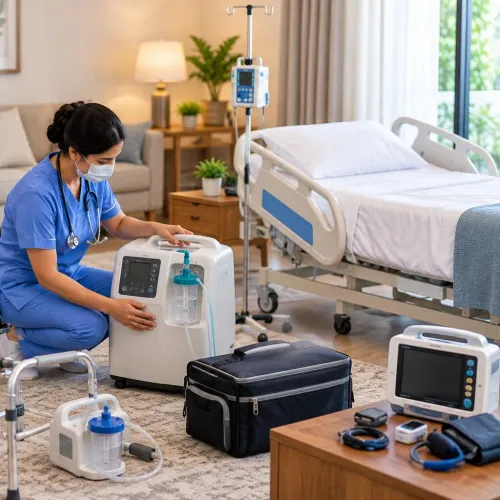
The visit can also test whether equipment fits the doorway and turning space and suits bed height and transfer ability. It does not guarantee payer approval for durable medical equipment.
How should the patient and caregiver prepare before the clinician arrives?
To prepare for a doctor home visit, gather every prescription, over-the-counter medicine, supplement, pill organiser, previous prescription, discharge summary, allergy record and recent test report. This supports medication reconciliation: the clinician can compare what the patient actually takes with the intended regimen, especially after hospital discharge.
Write a symptom timeline covering onset, progression, falls, fever, pain, breathlessness, appetite, urine or bowel changes and recent medication changes.
Describe these details when booking:
- Whether the patient needs one-person or two-person transfer assistance, uses a wheelchair, has fallen, has a pressure sore, uses oxygen, has a urinary catheter or another device, or has infection-control concerns.
- Prepare a stable chair or bed area, good lighting and a clear route from the entrance. Secure pets, remove loose rugs and move cords without blocking emergency access.
- Keep oxygen away from smoking, vaping, candles, gas burners, fireplaces and every other flame. Follow supplier instructions, and do not start or increase oxygen solely from a consumer oximeter reading.
- After discharge, keep instructions visible and identify who manages medicines, transfers, wound care and appointments.
| Prepare | Why it helps |
|---|---|
| Medicines and records | Finds duplicate, stopped or changed drugs |
| Symptom timeline | Shows progression and treatment response |
| Clear patient area | Reduces falls and enables examination |
| Caregiver roles | Prevents missed medicines or follow-up tasks |
What should you check before choosing a home-visit provider?
Before accepting a booking, compare doctor home visit providers using questions that reveal what will happen at the door:
- Who will attend, and what are the doctor’s qualification and specialty?
- What is the expected arrival window?
- Which examination equipment is carried, and are basic point-of-care tests available?
- How will prescriptions, reports and follow-up after home consultation be delivered?
- What happens if the examination requires imaging, admission, specialist review or emergency transport?
- What are the transparent visit charges, travel or night charges, cancellation terms, payment method, insurance or private-pay status, and separate costs for tests, equipment or follow-up?
| House call | Hands-on assessment for a stable problem | Travel is unsafe or excessively burdensome |
|---|---|---|
| Teleconsultation | History, records and visual review without touching the patient | The patient can communicate and needs no physical examination |
| Clinic or diagnostic transport | Imaging, laboratory testing, specialist equipment or a planned procedure | The required service cannot be delivered at home |
| Emergency services | Immediate assessment and hospital-level treatment | Red flags or rapid deterioration appear |
Home health versus house call matters for payment: Medicare-covered home health generally requires homebound status, intermittent skilled nursing or therapy, and a clinician-established plan of care. Routine personal care alone does not qualify, but you can arrange a private house call without meeting those rules.
In Gurugram, assess Dhanraj Complete Healthcare Pvt. Ltd using these questions; equipment rental, diagnostics or emergency transport never replaces a doctor’s clinical judgment. Book when the problem is stable but travel is unsafe or excessively burdensome.
Use emergency services for severe chest pressure, breathing difficulty, new facial droop, one-sided weakness, major bleeding, unresponsiveness, seizure or rapidly worsening confusion.
Related products
 | Doctor Visit at Home services Near me Doctor Visit at Home services Near me 24x7 hours all services for patients care at home available here While there are many advantages to doctor visit at home services, the main ones are... View product → |
 | Doctor Consultation at Home If you or your loved one is going through a medical treatment and require doctor’s intervention regularly or need a general health check because of... View product → |
Frequently asked questions
Which mobility problems make a doctor home visit sensible?
Consider one when the patient cannot leave bed, sit upright, transfer safely, or travel without severe pain, fatigue, weakness, paralysis, or fall risk.
When should you choose teleconsultation, transport, or emergency services instead?
Use teleconsultation for stable problems that need advice. Arrange medical transport when assessment requires travel but the patient is stable. Call emergency services for breathing difficulty, chest pain, sudden weakness, severe bleeding, seizures, or altered consciousness.
What can a doctor assess during a home visit?
A clinician can review symptoms, examine the patient, measure vital signs, assess mobility and falls risk, inspect wounds, review medicines, and decide whether tests, treatment, or hospital care is needed.
How should you prepare for a doctor’s home visit?
Keep the patient accessible, clear a safe path, gather medicines and medical records, note symptom timing, prepare questions, and have identification and payment details ready.
What should you check before choosing a home-visit provider?
Confirm the provider’s registration details, clinician qualifications, service area, response time, equipment brought, emergency escalation process, fees, prescription policy, and follow-up arrangements.