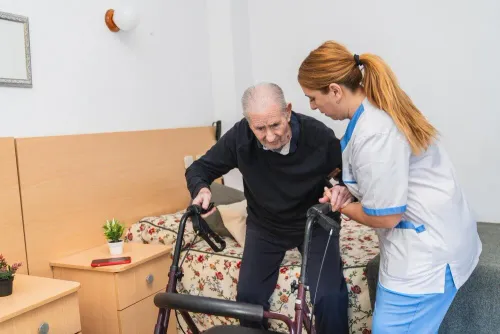



The right home-care professional depends on the patient’s clinical tasks, not the number of hours a family wants covered. Use the patient’s diagnosis, symptoms, devices, procedures, mobility, cognition, and written care plan to decide whether you need a registered nurse, attendant, therapist, doctor visit, or hospital-level support.
Key takeaways
- List every clinical task before requesting nursing hours.
- Escalate high-acuity needs to nurses trained in the required procedures.
- Ask for proof of competence in wound, catheter, tube, oxygen, or ventilator care.
- Compare shift coverage, handovers, emergency plans, and household safety.
Start with the clinical tasks, not the requested hours
Begin with a clinical-needs assessment, not a request for “12-hour nursing.” Record what the patient must receive, how often, and what could go wrong: transfers, bathing, feeding, continence, cognition, medication administration, injections, wound dressing, catheter or ostomy care, feeding-tube care, oxygen, tracheostomy, or ventilator support.
| Role | Suitable tasks | Boundary to verify |
|---|---|---|
| Registered nurse | Medication administration, injections, complex wounds, catheter care, clinical observations, unstable symptoms, palliative assessment | Confirm the individual’s licence and procedure-specific competency |
| General duty assistant | Companionship, meal preparation, reminders, light household help, and non-clinical supervision | Do not assign injections, wound care, oxygen changes, or tube care |
| Nurse aide attendant | Bathing, toileting, feeding, repositioning, transfers, and basic mobility assistance | Confirm training, permitted duties, and supervision requirements |
| Physiotherapist | Gait assessment, strengthening, transfer training, and fall-prevention exercises | This does not replace nursing or medical assessment |
Choose the least intensive role that safely covers every task, then upgrade when a procedure exceeds that person’s verified scope. A generic title does not prove competence; ask who will perform each procedure and how it will be supervised. The prescribing clinician must set oxygen flow and target saturation, not a home-care worker.
Home care is the wrong starting point for chest pain, severe breathlessness, new one-sided weakness, uncontrolled bleeding, seizures, inability to awaken, or sudden severe deterioration. Activate emergency services instead of waiting for a routine visit.
Check acuity before booking home nursing
Call emergency services instead of booking routine home nursing for chest pain, severe breathlessness, new one-sided weakness, seizure, uncontrolled bleeding, inability to awaken, or sudden severe deterioration. These emergency symptoms need rapid assessment, diagnostics, and treatment that a home visit cannot provide.
Home nursing triage should separate a stable task from a changing condition:
| Level | Patient situation | Correct action |
|---|---|---|
| Routine home nursing | Stable vital signs; prescribed medicines, wound dressing, catheter care, feeding support, or mobility assistance | Arrange a nurse with the documented skills and a written care plan |
| Same-day clinical review | Repeated vomiting, worsening infection, new confusion, a falling oxygen saturation, missed medicines, or unstable blood pressure without collapse | Contact the prescribing clinician for same-day assessment; send the patient for urgent evaluation if directed |
| Hospital or emergency care | Severe breathing difficulty, chest pain, suspected stroke, uncontrolled bleeding, altered consciousness, seizure, shock, or a need for continuous monitoring, rapid diagnostics, surgery, or intensive care | Activate emergency services; do not wait for a nurse visit |
Oxygen dependence does not justify changing flow rates or target saturation at home without the prescriber’s written instructions. Tracheostomy or ventilator patients need trained responders, suction and airway equipment, alarm guidance, backup power, and a written response to blockage, accidental decannulation, respiratory distress, or equipment failure.
Ask the provider to name the after-hours clinician and define routine callback, same-day review, urgent evaluation, and emergency activation.
Match procedures to proven nursing competence
A nurse who can give tablets is not automatically qualified for injections, complex wound dressing, or airway equipment. Match each task to documented training, a current licence, and recent hands-on experience; a caregiver limited to bathing, feeding, companionship, or basic mobility assistance cannot substitute for skilled nursing.
| Need | Competence to verify | Suitable match |
|---|---|---|
| Medication administration | Medication reconciliation, dose timing, side-effect observation, and escalation for missed doses or reactions | Nurse; attendant only for reminders where permitted |
| Injections | Route-specific training for subcutaneous, intramuscular, or insulin injections, plus sharps disposal | Licensed nurse with validated injection competency |
| Wound dressing | Assessment of depth, drainage, infection signs, pressure injury staging, and sterile technique | Nurse experienced with the wound type |
| Catheter care | Closed drainage maintenance, unobstructed flow, indication review, and recognition of infection or blockage | Nurse, not someone who only empties bags |
| Feeding tube | Tube-position checks, flushing, feed administration, aspiration precautions, and blockage response | Nurse trained on that tube |
| Tracheostomy care | Suctioning, tube obstruction, accidental decannulation response, oxygen, and emergency equipment | Nurse trained and assessed in airway care |
| Mobility, dementia, or palliative care | Safe transfers, falls prevention, behaviour support, continence care, symptom relief, and end-of-life communication | Attendant, therapist, or nurse according to task complexity |
Ask the provider to show the individual’s licence and procedure-specific competency records, not just the agency’s service list. Ventilator support, unstable vital signs, altered consciousness, severe breathlessness, uncontrolled bleeding, or continuous monitoring needs require a higher-acuity plan or hospital care, not routine home nursing.
Compare shifts, visits, handovers, and household safety
A patient who needs uninterrupted observation should not be placed on visit-based care. Choose coverage by the time risk occurs: one nurse per shift for continuous skilled monitoring, overnight care for night-time risks, or live-in care when supervision and assistance are needed across the day without constant clinical observation.
| Arrangement | Coverage and handover | Best fit | Main limitation |
|---|---|---|---|
| Visit-based care | Scheduled visits; record changes for the next visit | Stable patients needing medicines, dressings, or checks | Gaps between visits |
| Overnight care | Continuous night presence and morning handover | Falls, confusion, night medicines, or sleep-related monitoring | Daytime coverage remains separate |
| One nurse per shift | Defined shift hours, written handover, named replacement | Patients needing 24-hour coverage or skilled monitoring | Missed handovers create clinical risk |
| Live-in care | Resident caregiver with planned rest and relief periods | Supervision, mobility, continence, and daily activities | Not continuous nursing observation |
Require every handover to record vital-sign trends, medicines given or missed, wounds, intake and output, device settings, alarms, incidents, and pending actions. Confirm who is available after hours and whether a call triggers routine advice, same-day review, urgent evaluation, or emergency services.
- Keep oxygen away from smoking, candles, gas stoves, fireplaces, and heat; document the power-outage and equipment-failure plan.
- Name who supplies, cleans, maintains, and urgently replaces each device.
- Confirm hand hygiene, gloves, sharps disposal, linen handling, waste disposal, and clean-supply storage.
- For tracheostomy or ventilator care, keep trained responders, suction, backup power, alarm instructions, and an accidental-decannulation pathway ready.
Turn the assessment into a provider-selection checklist
Do not appoint a provider until it can show who will deliver care, who supervises them, and what happens when the patient worsens. Apply the same scrutiny to Dhanraj Complete Healthcare Pvt. Ltd or any local agency.
1. Request the nurse’s nursing registration details, identity document, employment history, background check, vaccination records, and training certificates relevant to the patient’s procedures. For tracheostomy, ventilator, catheter, feeding-tube, or wound care, ask for a practical competency demonstration, not a service-list promise.
2. Require a written care plan signed or reviewed by the prescribing clinician. It should state medicines and doses, vital-sign thresholds, wound or device instructions, visit times, handover method, fall hazards, pressure-injury prevention, oxygen-fire controls, and the family’s responsibilities.
3. Ask who answers after hours and demand four clear routes: routine call-back, same-day clinician review, urgent evaluation, and emergency activation. Chest pain, severe breathing difficulty, new one-sided weakness, uncontrolled bleeding, inability to awaken, or sudden severe deterioration requires emergency services, not a delayed home visit.
4. Get equipment accountability in writing. Name the person responsible for supplying, cleaning, maintaining, checking alarms, replacing consumables, arranging backup power, and securing urgent replacement of oxygen, suction, ventilator, or other devices.
5. Confirm how missed shifts, nurse changes, medication errors, falls, infections, and hospital transfers are reported and reviewed. Ask for documented handovers, incident records, supervisor contact details, and a replacement plan before signing.
Frequently asked questions
What should you assess before booking private nurse home care?
Record each required task, its frequency, the patient’s mobility, cognition, continence, medication needs, and risks such as falls or aspiration.
How do you match nursing competence to a patient’s procedures?
List procedures such as injections, wound dressing, catheter care, ostomy care, feeding-tube care, oxygen, tracheostomy, or ventilator support, then request evidence that the assigned nurse can perform them safely.
What should you compare besides the number of nursing hours?
Compare visits and shifts, handover procedures, backup staffing, emergency escalation, medication records, infection-control practices, and household safety.
When is home nursing not enough?
Seek a higher-acuity service when the patient needs continuous ventilator management, unstable vital-sign monitoring, frequent emergency intervention, or clinical equipment and skills the provider cannot supply.