

A senior may need help with a shower, a medicine schedule, a safe transfer, or a full day of supervision without needing the same type of professional for every task. By matching support to the person’s abilities, documenting changes, and recognising clinical warning signs early, families can arrange care that is safer, more respectful, and no more intensive than necessary.
Key takeaways
- Map ADLs and IADLs before selecting elder care services.
- Match caregiver hours to the senior’s actual daily assistance needs.
- Use transfer aids and clear techniques to reduce falls and injuries.
- Escalate new confusion, falls, swallowing trouble, or medication errors to a clinician.
Which Everyday Tasks Should Elder Care Services Cover?
Map the senior’s actual activities of daily living and instrumental activities of daily living before choosing elder care services. Activities of daily living include bathing, dressing, grooming, toileting, continence care, eating, hydration, sleep routines, and safe transfers. Instrumental activities of daily living include medication management, shopping, meal preparation, light housekeeping, transportation, and appointments.
Check whether the senior completes each task independently, with reminders, with hands-on help, or not safely. Include medication reminders for seniors, medication-list checks, companionship, meals, fluids, and changes in routine.
| Attendant or home health aide | Supports routine personal care and observes changes | Cannot diagnose, alter prescriptions, insert or remove an indwelling urinary catheter, or decide a symptom is harmless |
|---|---|---|
| Registered nurse | Assesses symptoms, administers or teaches prescribed treatments, reconciles medicines, and escalates concerns | Use for clinical assessment, treatment teaching, or post-discharge review |
| Physiotherapist | Addresses gait, strength, balance, transfers, and exercise technique | Use when mobility or fall risk needs professional assessment |
| Doctor | Diagnoses conditions and changes treatment | Use when symptoms require medical decisions |
| Family caregiver | Coordinates preferences, records, transport, and communication | Do not perform a professional task without training |
After discharge, compare every medicine the senior actually takes with the new prescription list. Check omissions, duplications, dose changes, and interactions with the pharmacist or prescriber. A family caregiver can coordinate this review but should not independently change doses.
How Much Support Does a Senior Need Each Day?
Match the senior care assessment to what the person can do, not to age or diagnosis. Observe bathing, dressing, toileting, eating, transfers, walking, medication use, shopping, meals, and transport, then mark each task as independent, completed with prompting, completed only with hands-on assistance, or unsafe to attempt.
| Support level | Choose it when |
|---|---|
| Occasional help | Needs predictable shopping, bathing twice weekly, or appointment support |
| Daytime elder care | Needs repeated meals, toileting, mobility, hydration, or supervision while family works |
| Overnight elder care | Wanders, toilets repeatedly, sleeps poorly, or transfers unsafely after dark |
| 24/7 senior care | Needs frequent assistance, cannot reliably call for help, has serious cognitive impairment, or uses complex equipment requiring a documented response plan |
Repeat this assessment after illness, a fall, hospital discharge, or a medication change. A sudden drop from prompting to hands-on help signals a fresh clinical review, not merely more hours.
Create a one-page daily care plan containing wake-up and sleep times, meals, clinician-set fluid goals, medicines, exercise, rest, toileting, appointments, preferred routines, emergency contacts, and changes to report. Keep it where every caregiver can read it.
Medicare-covered home health is narrower than general help at home. It generally requires homebound status, a physician- or allowed-practitioner-established plan of care, and intermittent skilled nursing, therapy, or other skilled services. Medicare does not pay for ongoing custodial care when personal assistance is the only need.
How Can Caregivers Make Personal Care and Transfers Safer?
Safer personal care starts with preparation, clear explanations, and never rushing an unsteady senior. These steps support elderly bathing safety, continence care, and safe transfers for seniors without taking away choice or privacy.
1. Before bathing, test the water temperature, place a non-slip mat and shower chair, improve lighting, and keep towels, clothing, and a call bell or phone within reach. Lock equipment wheels. Explain each step, and never leave an unsteady senior alone on a wet surface.
2. For toileting and continence care, prepare supplies first and wear gloves. Close the door, use a drape, explain what you are doing, clean from front to back where applicable, dry the skin thoroughly, and dispose of waste safely.
3. Do not use an indwelling urinary catheter for convenience or routine incontinence. Use one only for an appropriate clinical indication, keep the drainage system closed, and follow the nurse’s instructions for the bag and tubing.
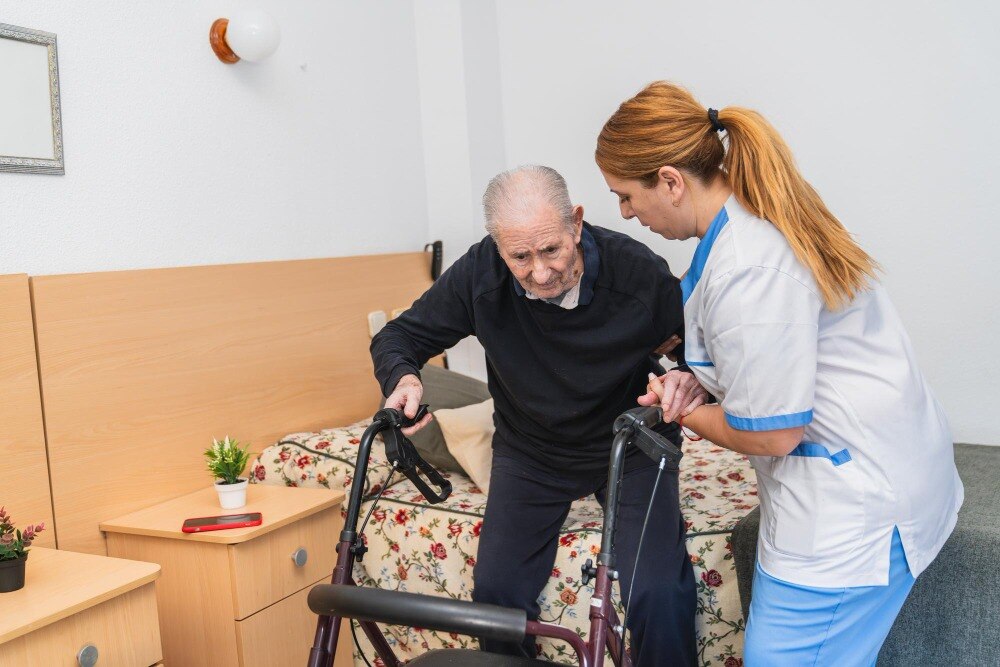
4. For transfers, remove loose rugs, check footwear, clear the bedroom, add night lighting along the route, and avoid walking in socks. Position the walker or commode wheelchair correctly, lock wheelchair brakes, use a gait belt only when trained, and move on a count rather than pulling the person’s arms.
A walker and commode wheelchair require a proper fit and a transfer method demonstrated by a trained professional. Delivery alone does not establish commode wheelchair safety.
When Do Everyday Care Needs Become a Clinical Problem?
Routine supervision is no longer enough when these elder care warning signs appear; contact a nurse or doctor promptly:
- Repeated falls, sudden confusion, new weakness, swallowing difficulty or choking
- Fever, breathlessness, chest pain, new or worsening pain
- A marked decline in eating or mobility
- A pressure injury, or inability to pass urine or stool
Record the exact time and circumstances of each change, fluid intake, meals, bowel movements, falls, pain, sleep, mood, and missed doses. Measure blood pressure or blood sugar only when prescribed, and use the treating clinician’s personalised targets rather than invented universal thresholds.
A pulse oximeter is a screening aid, not a diagnosis. Poor circulation, skin pigmentation, cold fingers, tobacco use, and nail polish can affect pulse oximeter readings, so report breathing symptoms and the number together.
Pressure injury prevention needs skin checks, repositioning, moisture management, adequate nutrition, and assessment of immobility, sensation, circulation, and incontinence. An air mattress alone is not enough.
Professional responses differ:
| Professional | Response |
|---|---|
| Nurse | Assesses and reports clinical changes |
| Physiotherapist | Reviews deteriorating mobility |
| Doctor | Diagnoses illness and changes treatment |
Call emergency services for severe breathing difficulty, unresponsiveness, a major injury, or any other life-threatening symptom. Good home health monitoring helps a clinician act sooner; it does not replace assessment.
What Should You Check Before Arranging Elder Care Services?
Choose a provider against the senior’s actual risks, not a label such as “attendant” or “24-hour care.” Ask who performs each task, their training and supervision, the absence-cover plan, how medicines and incidents are documented, and how quickly a nurse or doctor can be reached.
- For home diagnostic testing, ask whether staff follow the manufacturer’s instructions, use quality-control practices, and explain when an unexpected result needs laboratory confirmation or clinician review. A home test is not automatically equivalent to a full laboratory evaluation.
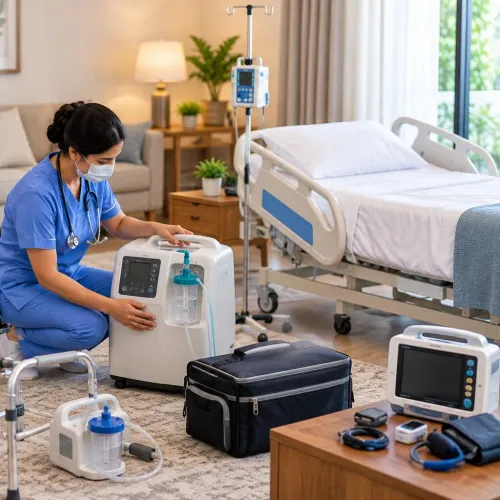
- For home oxygen safety, require a written plan banning smoking, flames, sparks, petroleum-based products, and poorly maintained electrical equipment near oxygen. Confirm supplier-approved operation.
- For ICU setup at home or ventilator support, require trained caregivers, backup power and equipment, monitoring, a written emergency plan, and a reliable urgent-help pathway.
- Confirm that ambulance transport is medically necessary, not chosen only for age or convenience, and ask whether the destination and documentation meet applicable payer rules.
- Before renting or buying equipment, verify the prescription, home-use instructions, repair and replacement terms, and supplier eligibility. Medicare coverage depends on medical necessity, prescribing rules, home use, and an eligible supplier—not usefulness alone.
| Risk level | Minimum provider safeguards | Do not accept |
|---|---|---|
| Routine personal care | Named caregiver, supervision, absence cover | Unassigned staff |
| Clinical changes | Nurse escalation and documented observations | “Wait and see” advice |
| ICU-level support | Trained team, monitoring, backups, emergency help | Equipment delivery alone |
In Gurugram, Dhanraj Complete Healthcare Pvt. Ltd can be one provider to compare for attendants, nursing escalation, home diagnostic testing, transport, or equipment support. Compare its written care plan with this checklist.
Related products
 | Old Age Care Our attendants are present at every stage, helping with bathing, eating, engaging in stimulating activities for mental well-being, and making sure... View product → |
 | Patient care services at home 24x7 hours all types of patients care services available here Benefits of patient care services in Gurugram include individualized, expert treatment... View product → |
Frequently asked questions
Which everyday tasks should elder care services cover?
Support can include bathing, dressing, grooming, toileting, continence care, eating, hydration, sleep routines, safe transfers, medication management, shopping, meal preparation, light housekeeping, transport, and appointments.
How much support does a senior need each day?
Assess each activity of daily living and instrumental activity of daily living, then record whether the senior is independent, needs supervision, needs hands-on help, or cannot complete the task safely.
How can caregivers make personal care and transfers safer?
Prepare the route, use suitable mobility aids, lock wheelchair brakes, explain each step, protect privacy, and avoid lifting a person manually when a transfer aid or trained assistance is required.
When do everyday care needs become a clinical problem?
Seek clinical assessment for new falls, sudden confusion, breathing difficulty, swallowing problems, pressure injuries, uncontrolled pain, repeated medication errors, or a rapid loss of function.
What should you check before arranging elder care services?
Confirm the caregiver’s duties, hours, training, supervision, emergency procedure, communication process, replacement coverage, and whether clinical tasks require a nurse or other qualified professional.
Related products
 | The most popular items Walkers, Rollators & Accessories 24/7 The most popular items Walkers, Rollators & Accessories 24/7 24x7 hours all types of Walkers, Rollators & Accessories services available here For those with mobility impairments, walkers, rollators, and their... View product → |
 | commode wheel chair ₹4799 The Commode Wheelchair is a versatile and practical solution designed to enhance the mobility and independence of users who require assistance with... View product → |
 | Doctor Consultation at Home If you or your loved one is going through a medical treatment and require doctor’s intervention regularly or need a general health check because of... View product → |
 | Home healthcare services in Gurugram Home healthcare services in Gurugram 24X7 hours all types of home healthcare services provided available here homelyhandshealthcare.com's list of advantages for home care nurses Benefits... View product → |